What is NaNoWriMo?
NaNoWriMo stands for National Novel Writing Month. Started by Chris Baty, it is a challenge for writers to finish the first draft of their manuscript—usually 50,000 words, in November. It is an intense challenge for writers to finally get that story they have been thinking about for years on the page.
Why?
So, why did I decide I wanted to try?
¯\_(ツ)_/¯
I thought it would be a fun challenge, not only to write a novel but to write about my experience of writing a novel. I have never written fiction, and certainly never written 50,000 words in such a short amount of time. But I wanted to know if I could do it. So in October, I started preparing.
My NaNoWriMo experience
October: Preparing
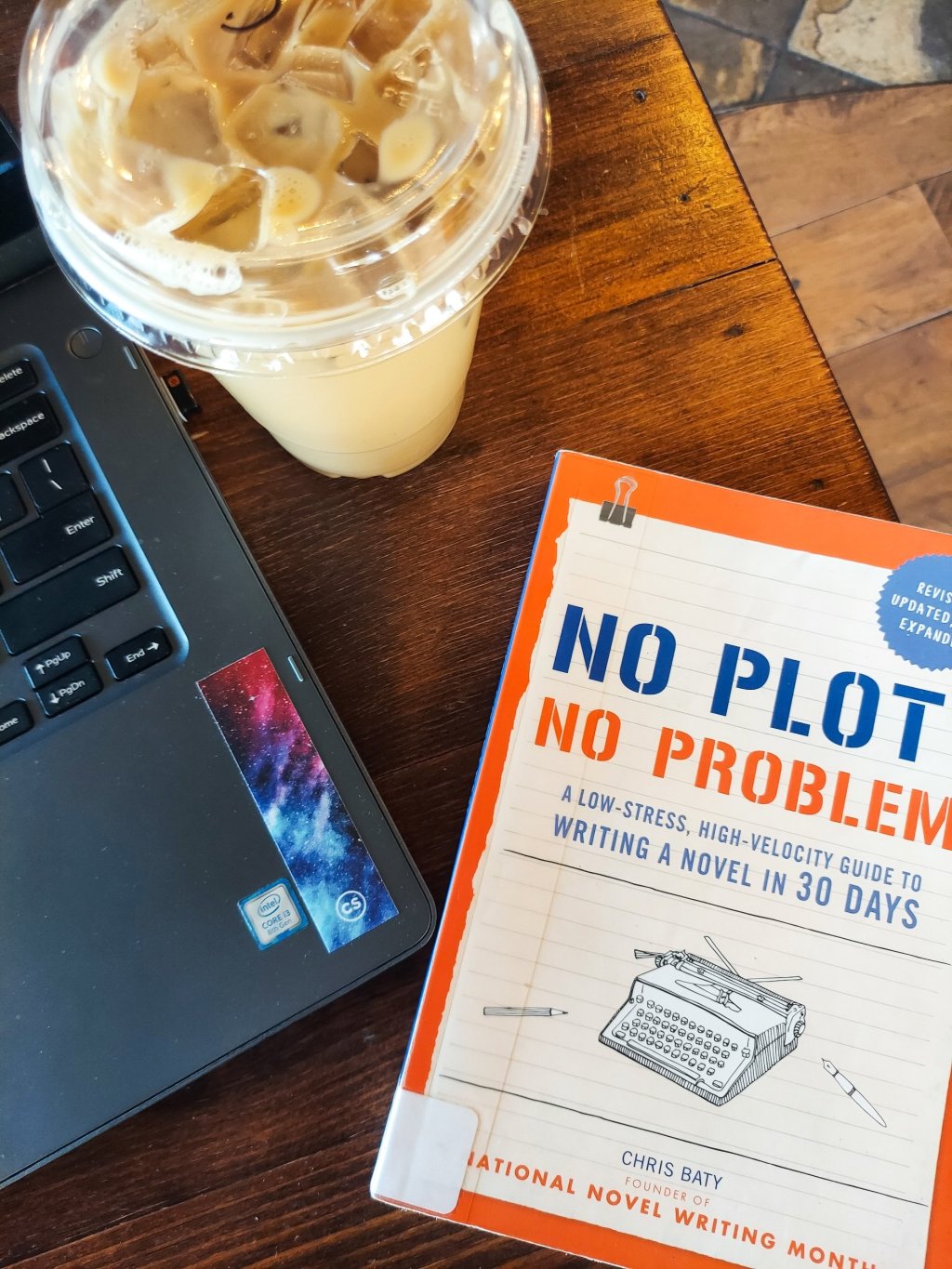
I read two books to prepare for NaNoWriMo. The first was No Plot? No Problem!: A Low-stress, High-velocity Guide to Writing a Novel in 30 Days by Chris Baty. Baty outlines how to attempt NaNoWriMo with tips, tricks, a timeline for writing, and motivation to push you through the process. After reading, I had a better idea of how to structure my days, as well as the mental obstacles I would have to overcome to push through a month of writing.
I wanted to make this month as easy as possible. So the second book I read was Save the Cat! Writes a Novel: The Last Book on Novel Writing You’ll Ever Need by Jessica Brody. Save the Cat is a popular method for structuring stories that include fifteen plot points to consider when crafting a novel. I decided to follow this structure because I had no experience with writing such long-form works.
With these two books rattling around in my brain, I set off to craft a loose structure for my novel. But first, I needed a story idea.
I…had nothing.
Some people can conjure up characters and original stories at the drop of a hat. I am not that person. Following my mantra of making this process as easy as possible for myself, I decided to base my story on one of my favorite books: The Great Gatsby. And by base, I mean basically write a sequel. The Great Gatsby: Part II. Hey, it’s in the public domain; it’s fair game!
I wrote down the plot points following the Save the Cat! method and brainstormed ideas, scenes, and characters I could include in my work. And I waited until November started.
Week 1: Off to the races
I noticed that telling a lot of people I was working on it helped me stay on track. I told a few people at my work, as well as my family and friends. This added a layer of accountability and motivation.
I used WriteTrack, which is a free website I found online for planning out how many words to write a day and it was a lifesaver. Adding in my progress every day was such a serotonin boost, and just amazing that I would write so much. That I was capable of writing that much. I told myself my rule would be to not delete anything, and I did pretty well on that rule.
I quickly started to notice my writing habits, likes, and dislikes. I found a sweet spot of an hour at a time, two times a day, was long enough to get in a groove but short enough that I didn’t start despairing. I thought I would need complete silence when writing, or have to write on my laptop, but I loved taking out my phone during my work breaks or right before bed and adding another hundred words.
Week 2: Getting a little shaky
Now I am struggling to hit the word count. I fell behind on a few days and it was hard to get back into it. I spent a few of the days beefing up my outline, which helped a little. At this point was when I started to realize that not having a strong story idea I was passionate about was starting to take a toll.
For people who have been planning a novel idea and thinking about their characters for a long time, this is a good idea. But for me, I think that trying to push out a novel without strong feelings toward the story is destined to fail. But I was sadly realizing this two weeks into NaNoWriMo.
But also, I am a novice. This is my first fiction work. There were bound to be hiccups and feelings of inadequacy. Yet after the first week of stumbling to decide where I wanted this story to go, everything started to fall apart.
Week 3: Aaaaaand I gave up
Complete defeat. I avoided opening my Word doc like it had the bubonic plague. At 14,800 words, I had completely run out of steam for where I wanted this project to go. Even then, the last few pages were just me trying to hit the word count as best I could.
Tips for NaNoWriMo:
So, what did I learn from this failure? One, that it is okay to fail. I didn’t hit my goal, but WOW, I wrote almost 15,000 words of fiction. But after all of that, here is what I learned:
-
Figure out how many words you can realistically write in a day, and use that as your base. Do not expect to be able to write 4,000 words a day if you get antsy by 1,500 words.
-
Set a dedicated writing time, either in the morning, at night, during lunch, or whenever you have a chunk of time you can dedicate to writing. This sets a habit and makes it easier to know when you will have time.
-
Treats! The days that I had the most progress were when I set dedicated time and made it an event. Going to a coffee shop, ordering a drink, putting in my headphones, and dedicating the next few hours to writing.
-
Don’t tie yourself down to a certain place or device. I tried to cram as much writing into my day as possible to hit my word goals the first week. I downloaded Word on my phone, and that took away boundaries around writing I didn’t know I had. I replaced scrolling with editing or adding a few words. 100 words during a lunch break or editing a paragraph while waiting in line.
-
NaNoWriMo is best if you have a manuscript or strong story idea already but need the motivation to finish. It is much harder if you don’t have a strong story idea (which I figured out pretty quickly). What will motivate you through the tough middle days is a passion for the characters and the story you are trying to tell. Which in hindsight, was the entire point of NaNoWriMo. It was meant to be a way to finally give a hesitant writer a push to start that first draft, not complete an entire novel in 30 days.
-
I think what I also learned is a greater appreciation for fiction writing. I can finish a book in a day that took the author months, even years to develop, write, rewrite, and edit. Things like pacing, foreshadowing, all of these important factors that make a book, well, not boring to read, are so hard to execute. Which is probably why not many people write novels. I would sit for an hour and write and write and end up with at most five pages, which is just a fraction of the story. But when writing, it felt like a lifetime.
Conclusion
NaNoWriMo is for those who have a story to tell but haven’t written it out yet. Writing an entire manuscript in one month is difficult. But it is meant to be difficult. It forces you to not focus on the quality and agonize over every word and just write. But in the end, I am glad I challenged myself.
 The Library Mouse's Book Nook